Why a Verified Plate Network Is Essential for Protecting Your Registration
Number plate cloning has become a persistent headache for drivers across the UK. Every year thousands of motorists discover that their registration mark has been copied, duplicated and fitted to another vehicle. The consequences range from penalty charge notices arriving at your door to the far more serious risk of being linked to criminal activity you had no part in. The traditional approach of simply reporting the issue to the police after it happens leaves you playing catch-up. That is where the concept of a verified plate network comes into its own, offering a layer of pre-emptive protection that the standard system cannot provide.
The basic problem is straightforward: number plates are physical objects made of reflective sheeting with printed characters. They can be reproduced by anyone with access to the right equipment. Although the law requires evidence of entitlement before a plate is supplied, enforcement is patchy and the checks are often cursory. A cloned plate can be ordered online with minimal scrutiny, fitted to a similar model of car and used for fuel theft, speeding, toll evasion or even more serious offences. By the time the legitimate owner discovers what has happened, the damage is done.
This is where the idea of a verified plate network protect-a-plate comes into play. It shifts the emphasis from reactive reporting to active monitoring. Rather than waiting for a letter from an enforcement agency to alert you that something is wrong, a system that cross-references registration details in real time can flag anomalies before they escalate. The core principle is simple: if your registration is linked to a network that tracks verification events, any attempt to use that plate on a different vehicle, or in a context that does not match your known details, generates an alert.
How Plate Cloning Happens and Why It Is Hard to Stop
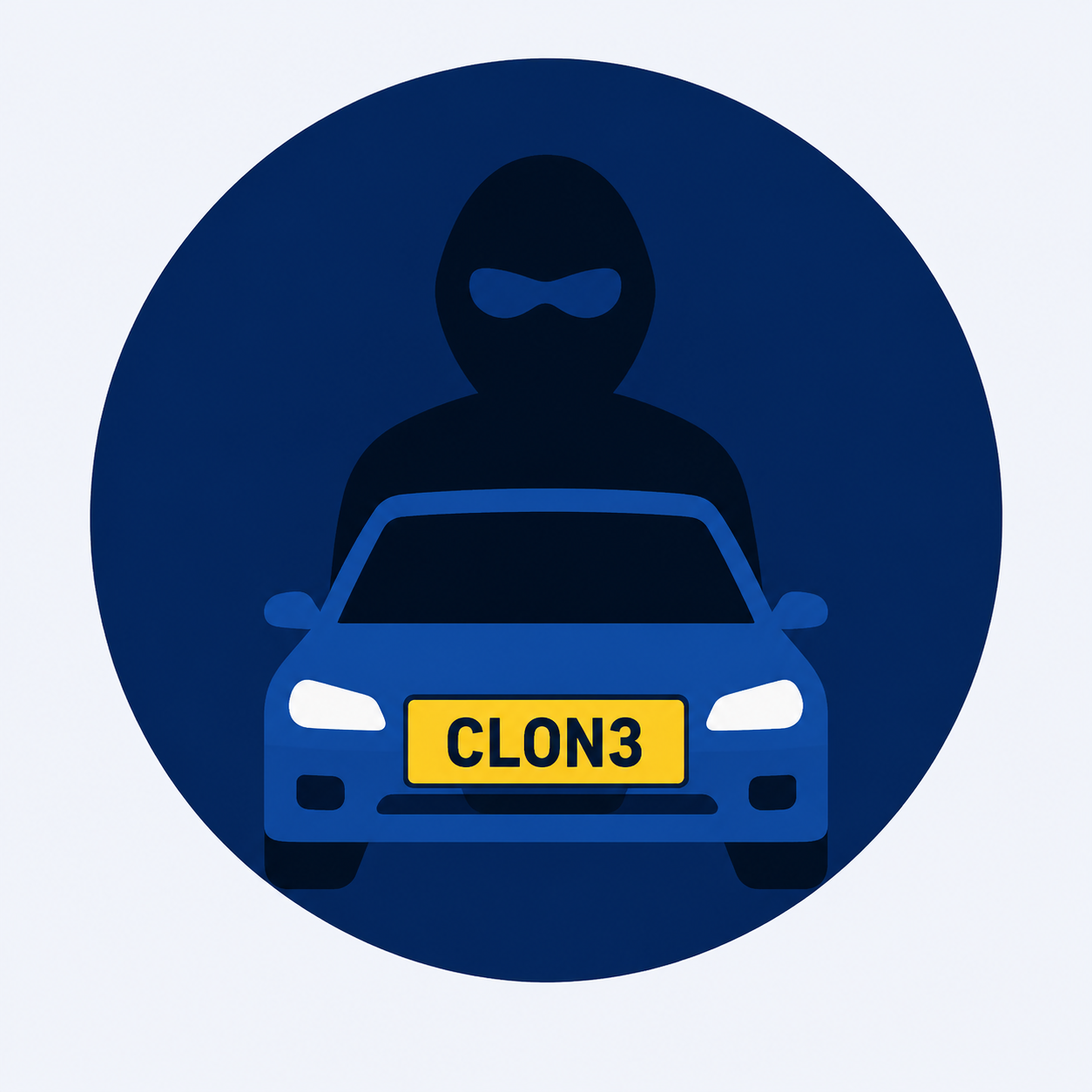
Cloning normally begins when someone observes a registration mark on a legitimate vehicle. They note the combination of letters and numbers, then order a replica set of plates from a supplier who does not ask for the required documents, or who accepts a doctored copy. The cloned plates are then attached to a car of the same make, model and colour. To a camera or a witness at a petrol station, the clone looks identical to the real vehicle.
The legitimate owner carries on unaware until a penalty notice arrives. By then the clone may have been used multiple times. Proving that you were elsewhere at the time of the offence, and that your plate was copied, takes time and evidence. The police have finite resources, and although the DVLA maintains a register of vehicles, that register is not designed to provide real-time verification every time a plate is checked. The gap between what is possible in theory and what happens in practice is what a verified plate network aims to close.
Some drivers try to reduce the risk by using tamper-proof fixings or anti-theft screws. These measures make it harder for a thief to steal the physical plate from your car, but they do nothing to stop someone who simply photographs the plate and orders a fresh copy. The vulnerability lies in the verification process, or the lack of one, not in the physical security of the plate on your vehicle.
What a Verified Plate Network Actually Does
A verified plate network creates a communication channel between the vehicle owner, the database of registered plates and the enforcement bodies that check plates during their work. When your registration is enrolled in the network, it is flagged so that any query against that plate, whether from an ANPR camera, a police traffic stop or a parking enforcement scan, can be matched against your declared vehicle details.
If the system detects a mismatch, for example a scan that records a different colour or model of car carrying your plate, it generates a notification. That alert gives you the chance to act before the clone racks up more violations. It also provides evidence that the plate was being used fraudulently, which strengthens your position when disputing penalties.
One example of such a service is the verified plate network protect-a-plate, which ties together registration data with real-time monitoring. The aim is not to replace the official DVLA database, but to overlay an additional layer of verification that can operate independently. That distinction matters because the official register is a record of entitlement and ownership, not a live checking system for every plate on the road.
Why Real-Time Alerts Make the Difference
Speed of notification is critical. If you only find out about a cloned plate after the third or fourth penalty notice, you are already deep into the process of writing letters, providing statements and hoping that the enforcement body accepts your evidence. By contrast, an alert that arrives within hours of the first suspicious check gives you the upper hand. You can report the clone to the police while the trail is still fresh, and you can notify the DVLA to flag the plate as compromised.
The value of a verified plate network protect-a-plate lies in that early warning. Without it, the clone can operate for weeks or months, and each day increases the volume of evidence you need to rebut. For anyone who uses their car for work, or who drives a distinctive model that is a common target for cloning, the peace of mind alone is worth the effort of enrolling in a verification system.
What to Look for When Choosing a Plate Verification Service
Not all verification services are the same. Some rely on manual checks, others on automated database matching. The most effective are those that integrate with the ANPR networks used by police and local authorities, because that is where the majority of plate checks happen. You also want a service that allows you to update your vehicle details easily, because if your own records are out of date, the system may generate false alerts that erode your trust in the process.
- Check whether the service covers all major enforcement networks, not just a subset.
- Confirm that alerts are sent in real time, not batched at the end of the day.
- Look for a service that lets you nominate additional vehicles or trailers under the same registration.
- Verify that the data is stored securely and not shared for marketing purposes.
- Make sure the service provides clear instructions on what to do when you receive an alert.
The last point is often overlooked. An alert is only useful if you know how to act on it. A good service will guide you through the process of reporting the clone, preserving evidence and notifying the relevant authorities.
Limitations and Realistic Expectations
No system can stop a determined cloner from making a set of plates. What a verified plate network can do is reduce the window of opportunity in which those plates can be used without detection. It also creates a deterrent effect: if cloners know that certain registrations are actively monitored, they may choose easier targets.
There are practical limits to coverage. Not every car park, bus lane or toll road uses ANPR cameras that are linked to a verification network. Rural areas and smaller towns may have fewer camera installations, which means a clone could still operate in places where checks are rare. However, as the network grows, the gaps shrink. The cumulative effect of more registrations being enrolled and more cameras being connected makes the whole system more effective for everyone.
It is also worth noting that a verified plate network does not absolve you of responsibility for your own registration. You still need to check your vehicle details with the DVLA, report a lost or stolen plate promptly and keep your address up to date. The network is a supplement to those obligations, not a replacement for them.
Practical Steps for Drivers
If you suspect your plate has been cloned, or if you want to prevent it happening, the first step is to find out whether your registration is already in a verification system. If it is not, consider enrolling in one that covers the areas you drive through regularly. The cost of a cloning incident, both in time and stress, far outweighs the minor effort of setting up a monitoring arrangement.
Protect-A-Plate is one brand that offers this kind of service, and it is worth reading about how their verified plate network operates. The principle is the same regardless of the provider: link your registration to a live monitoring system so that any unusual activity triggers a notification. The brand itself has become associated with the idea of pre-emptive plate protection, and for good reason. When you have a system watching your registration, you can drive with more confidence, knowing that a clone will be caught much earlier than it would be if you relied solely on the post arriving.
In the end, the question is not whether plate cloning can happen to you, but whether you want to know about it within hours or months. A verified plate network gives you that choice. For anyone who values their time and their driving record, it is a straightforward decision.
 Twitter
 Facebook
 Instagram